English
 中文简体
 русский



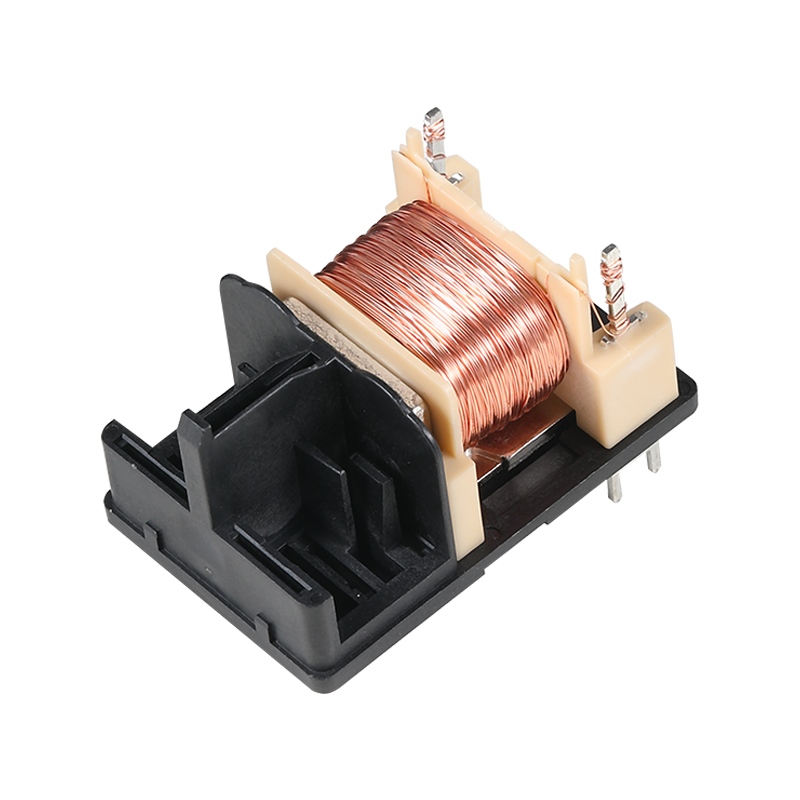
One short pulse flips the contacts, and then nothing more is needed: the relay stays where it was put. That behaviour comes from a permanent magnet and a carefully balanced moving part, and the plastic parts that surround them decide whether the balance survives production. Zhejiang Huateng Electronic Co., Ltd. has made Magnetic Latching Relay Components since October 1995, with injection moulding as its core skill, and its range includes the MLF Series and the MLQ Series.
What the Magnet Asks of the Plastic
An ordinary relay keeps its contacts closed by holding current through the coil. A latching relay does not. Once the armature has swung to one side, the magnet keeps it there, and the coil is energised just for the instant of switching. Smart meters and battery-powered devices rely on this to avoid a continuous draw.
There is a catch: the armature sits in a narrow balance between two stable positions. If the plastic bobbin that guides it is a fraction too tall, the armature drags. If the base is slightly out of square, one position holds more firmly than the other, and the relay can fail to flip on a weak pulse. For Magnetic Latching Relay Components, the accuracy of every moulded part therefore carries more weight than in a plain relay.
Parts Made by Injection Moulding
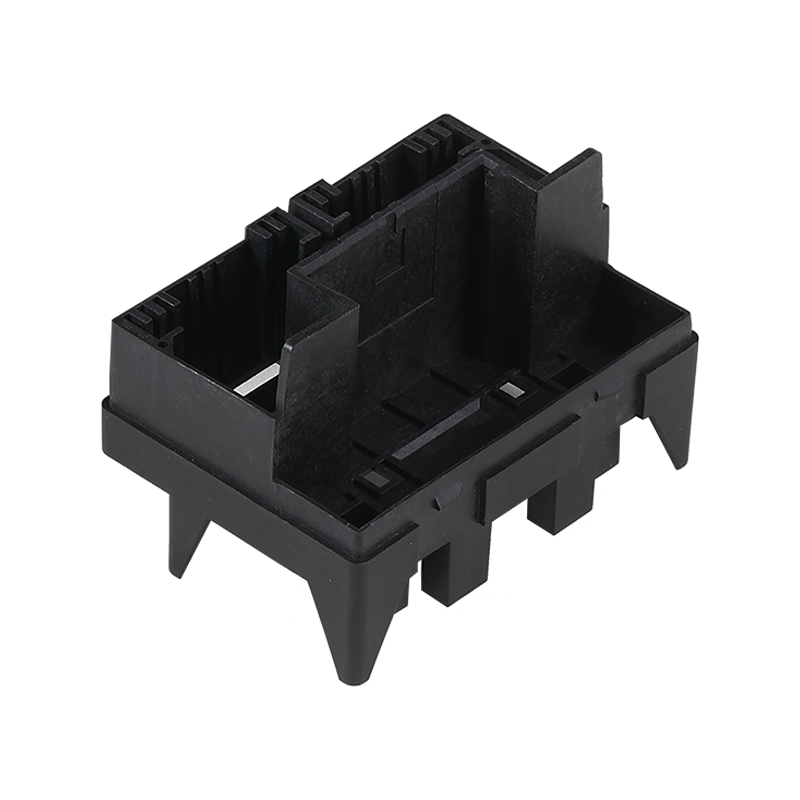
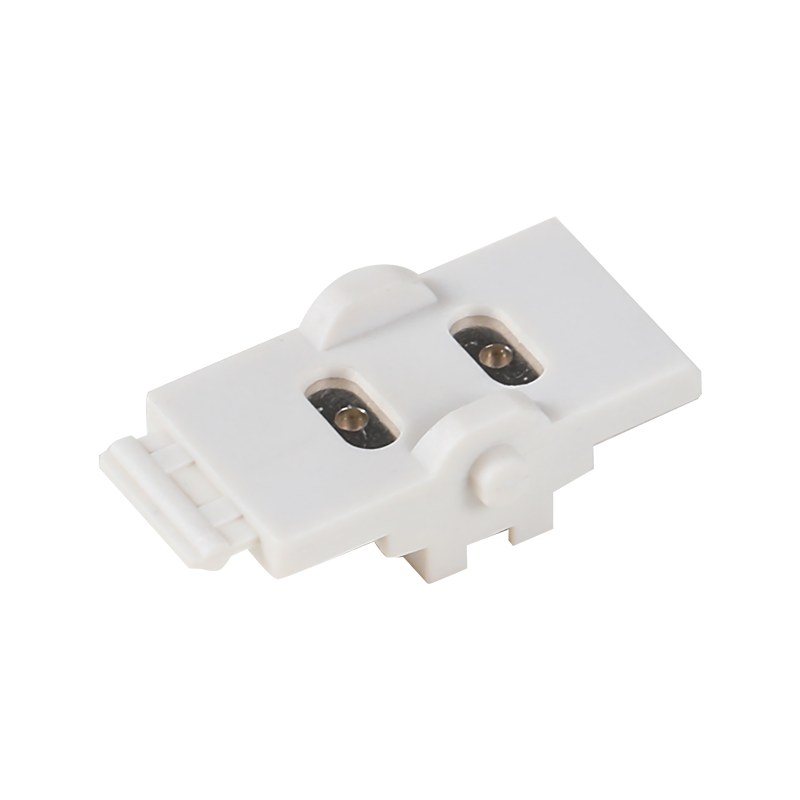
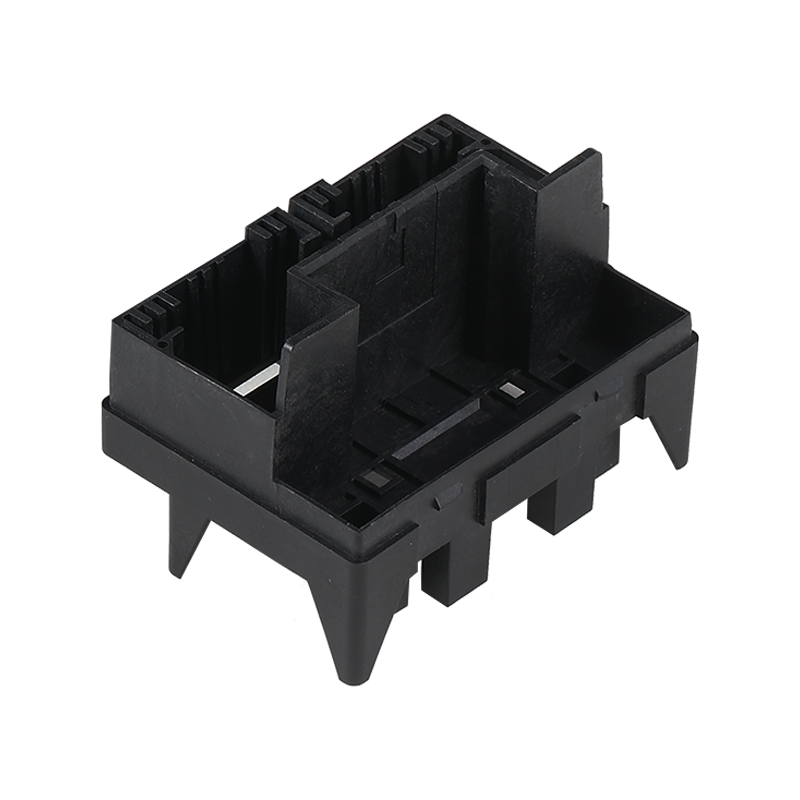
Huateng produces the plastic side of the relay, and the Magnetic Latching Relay Components it moulds include enclosures, baseplates, terminal blocks, actuators and mounting hardware. Each touches the moving system in a different way.
- The baseplate locates the coil, the magnet and the contact springs relative to one another.
- The actuator carries motion from the armature to the contacts, so its length and stiffness set how far the contacts travel.
- The terminal block fixes the pins in position and keeps live parts apart.
- The enclosure keeps dust out and holds the assembly together.
Injection moulding suits this work, since a steel mould repeats the same geometry shot after shot.
Where Tolerances Show Up
Contact gap on Magnetic Latching Relay Components is a distance of fractions of a millimetre. Add the thickness of a terminal slot, the travel of the actuator and the seat of the magnet, and a small stack-up of errors can leave a relay with contacts that bounce or fail to close. Mould upkeep is the control here: worn cavities, uneven gates and shrinkage drift all move dimensions out of the window the relay maker designs to, and injection moulding expertise is what keeps them inside it.

Flash is the other enemy. A thin fin of plastic at a parting line can flake off inside a relay and land between contacts. Clean parting lines and well-fitted mould halves keep that risk low, so moulders of Magnetic Latching Relay Components watch the condition of the mould as closely as the resin.
Heat Is Part of Assembly
Heat reaches Magnetic Latching Relay Components twice: once when pins are soldered to a board, and again in service next to power parts. A plastic that softens under soldering heat shifts the terminals; one that creeps under steady warmth loosens the armature seat. Heat-stable, flame-retardant resins are the usual choice for relay bodies, and moulding temperatures have to be controlled so the part comes out without internal stress that would relax later and warp the base.
Huateng works with practical, environmentally friendly materials, a point that matters for relays shipped to markets with substance restrictions.
How the Parts Get Put Together
A relay maker does not receive Magnetic Latching Relay Components as a finished relay. Pins are pressed into the terminal block, the magnet is seated in the base, the coil is dropped in, and the cover is closed over everything, often on an automatic line. Small features in the moulding make that possible: a chamfer that guides a pin into its slot, a rib that locates the magnet, a step that lets the cover seat without rocking. Leave those out, and the line stops every few minutes to correct a misfeed.
The MLF Series and the MLQ Series give relay makers two part families to build on, whether the finished relay goes into a vehicle or a household appliance. In both cases the design discussion between moulder and relay maker settles parting lines, gate positions and critical dimensions before steel is cut, because changing them afterwards costs far more than agreeing on them early.